PinnacleDigest


Clem Chambers: This Market Is a Bubble, and It Could Go Much Higher
Clem Chambers says today’s market may be entering a true speculative bubble, not a normal bull market. He explains why AI, liquidity and copper could drive another major leg higher before the eventual break.

The S&P 500 Is Near Record Highs. Underneath, the Market Is Telling a Different Story
The S&P 500 remains near record highs, but beneath the surface the market has become increasingly concentrated in a small group of mega-cap technology and AI stocks. History shows that extreme concentration can persist for a time, but the crashes of 1973 and 2000 are reminders that when leadership narrows and speculation accelerates, retail investors can be especially vulnerable when sentiment turns.

The Fed May Have to Break the Economy to Break the Bond Market
The last time U.S. Treasury yields were this high, federal debt was roughly one-quarter of its current size. With more than $40 trillion now outstanding, today's bond-market stress may force the Federal Reserve into a far more painful choice than investors faced in past cycles.

Bill Holter Told Me to Watch The Great Taking. I Did. Now I Have Questions.
Bill Holter challenged me to watch The Great Taking. I expected another argument about Wall Street excess. Instead, I found a much deeper question hiding underneath modern markets: when a financial intermediary fails, what do you actually own?

Could America Revalue Gold to $180,000? Bill Holter Explains Why It’s Possible
Bill Holter lays out the case for why America’s swelling debt burden and rising financing costs could eventually force policymakers to rethink the role of gold. His argument centers on a potential monetary reset, the fragility of Treasury collateral and what a major gold revaluation could mean for the dollar and global financial system.
100K+ INVESTORS FOLLOW OR SUBSCRIBE TO US

Wall Street Wants to Tokenize Everything
Wall Street says tokenization is about efficiency. David Morgan thinks it may be about something much bigger: turning real estate, government land and eventually the physical world itself into collateral for America’s debt machine.

David Morgan: America’s $40 Trillion Debt and the Monetary Reset Already Underway
David Morgan believes America’s $40 trillion debt problem may ultimately lead to a monetary reset. He explores how tokenization, digital IDs, programmable money, gold and silver could fit into a rapidly changing financial system.

General Petraeus Warned the Future of War Was Already Here
General David Petraeus warned months ago that Ukraine was already revealing the future of warfare. Since then, drones, autonomous systems and AI-driven battlefield technologies have only accelerated. His latest comments suggest the West is still adapting too slowly. The warning is no longer theoretical, it is playing out in real time.

Japan’s Debt Trap: What Happens When a ¥1.35 Quadrillion Debt Machine Meets 3% Interest Rates?
Japan’s ¥1.35 quadrillion debt load was built for a world of near-zero interest rates. With 10-year government bond yields now above 3%, rising refinancing costs, a weakening yen and persistent inflation are pushing the country toward an increasingly difficult fiscal and monetary crossroads.
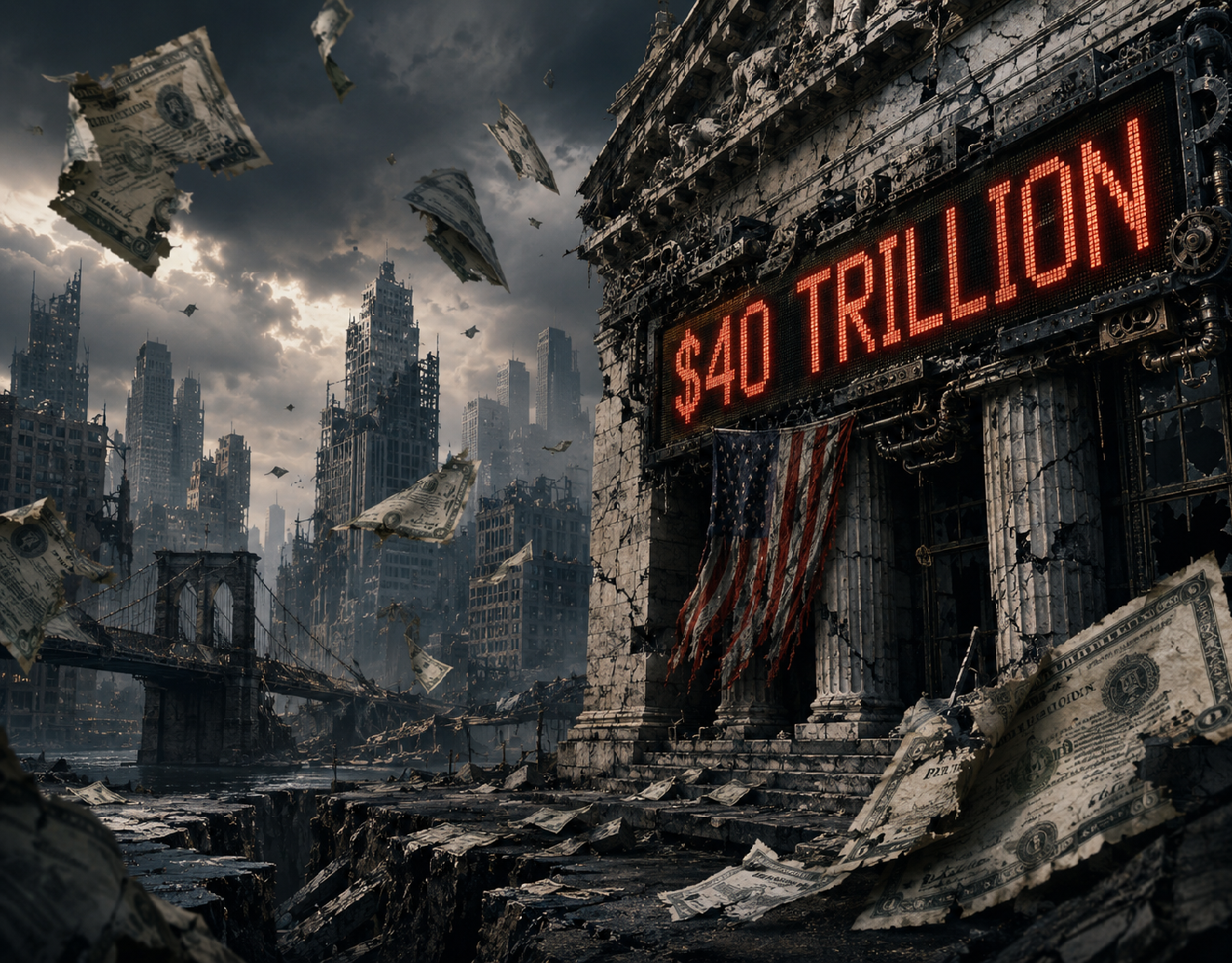
America Just Crossed $40 Trillion. What Happens When the Bond Market Says Enough?
U.S. debt has crossed $40 trillion as borrowing costs climb. Nomi Prins explains why the bond market matters, why QE could return, and why gold, silver and other hard assets may benefit.

Could the U.S. Treasury Return to Its 1934 Gold Playbook?
Former Swiss banker Clive Thompson explains how America’s rising debt burden could eventually push policymakers toward revaluing the nation’s gold reserves. He also explores what that could mean for Treasury yields, government financing, and the future of the monetary system.

Why Life Is So Expensive: What the Inflation Rate Misses
Inflation feels worse than the official numbers because consumer prices tell only part of the story. Learn how monetary expansion reshapes the cost of living, pushes capital into scarce assets, and changes what investors should look for.

Gold Will Not Replace The Dollar. And That's a Good Thing.
The dollar is losing ground, but no rival currency is close to replacing it. Instead, a new monetary system is emerging, one where dollars remain essential for trade, stablecoins extend their reach, and gold becomes the world’s long-term insurance policy.

This Macro Risk Could Destroy the Economy for Decades
Fertility rates across the developed world have collapsed to levels that cannot sustain current populations, yet investors are barely paying attention. By 2040, fewer workers will be supporting more retirees, pressuring pensions, healthcare, housing and entire industries...

Why the Rich Secretly Love Inflation
Inflation erodes the purchasing power of wages and cash, but it can reward people who own scarce, productive assets. From Washington timberland and New York real estate to California vineyards, oil fields and mineral deposits, history shows how hard assets have created extraordinary wealth. The lesson is not simply to own physical assets, but to own productive assets with scarcity, income potential and long-term demand.

Is AI Deflationary?
New Fed Chairman Kevin Warsh believes AI could become the most powerful disinflationary force in decades, but it's arriving just as the West begins an expensive push to rebuild manufacturing, energy systems and strategic supply chains.
.png)
Finding the Next 10X Mining Stock
The next 10X mining stock will not be found by chasing hype. Jeff Clark reveals how he evaluates junior gold stocks, from geology and drill results to management ownership, dilution, economics, and the warning signs that can destroy a promising story.
100K+ INVESTORS FOLLOW OR SUBSCRIBE TO US
Be part of our investor community. Get sharp insight on capital flows, emerging technologies, commodity cycles, and macro trends shaping tomorrow’s markets.
